Types of jewelry

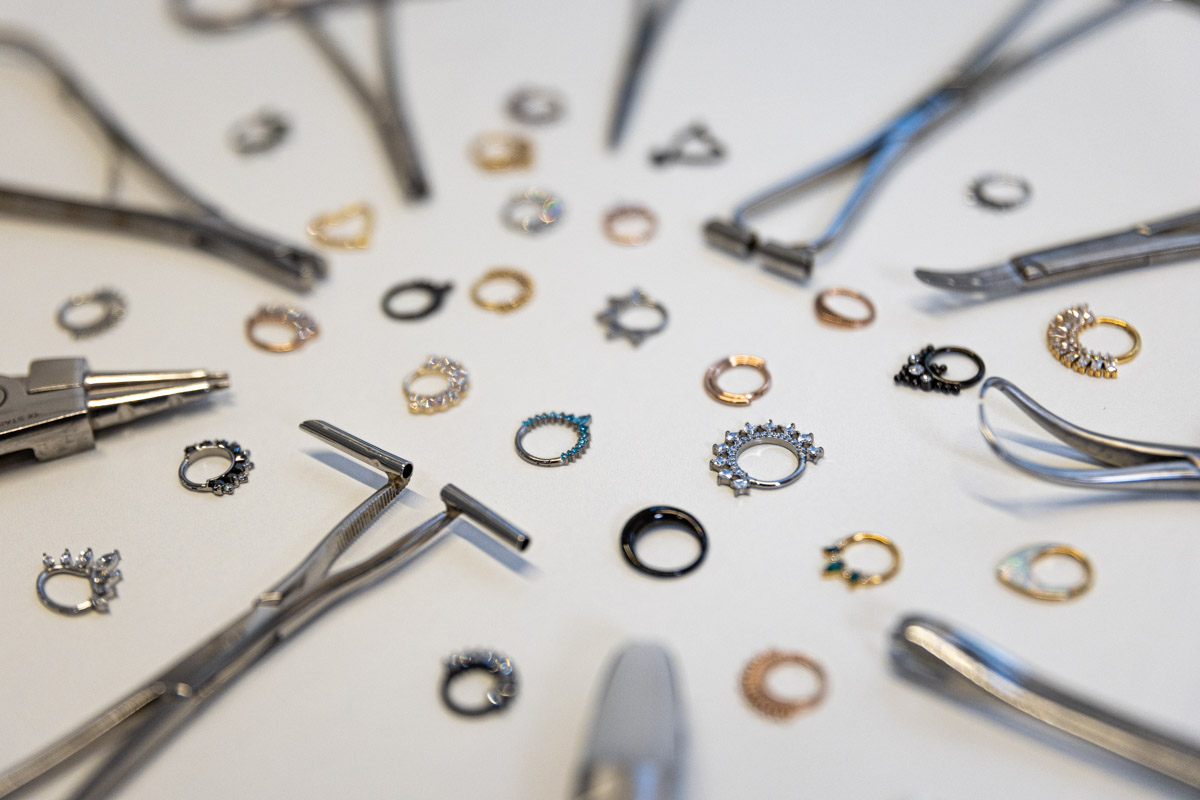
TYPES OF JEWELRY
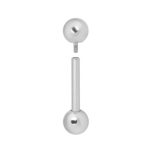
BARBELL
A classic barbell is a flat bar with balls at the ends. Both balls can be removed.
Some models have one side fixed (example in the photo) to ensure that the decorated attachment is always positioned at an angle of 90 degrees relative to the rod itself.

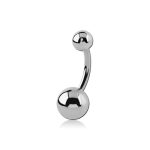
BENT BARBELL
The classic bent barbell is a bent bar with balls at the ends. Both balls can be removed.
Decorated jewellery models (e.g. for the navel) have a fixed underside to ensure that the decoration (e.g. zirconia) is always facing the outside (forward facing).

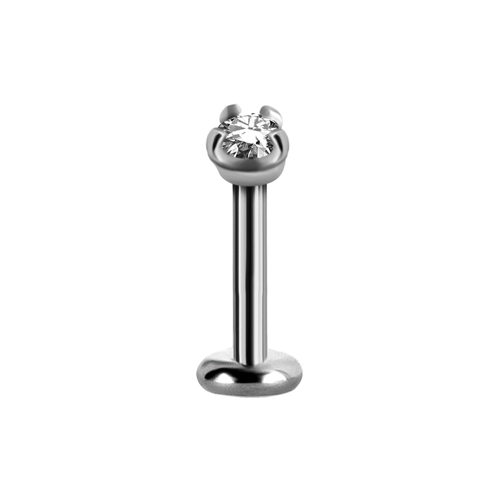
LABRET
A labret is a straight bar with a fixed disc on one end and a removable attachment on the other.
With this type of jewelry, special attention should be paid to the threading, especially when the attachment is purchased separately from the base (for more information on threading, see the bottom of the page).
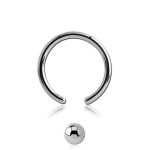
BALL CLOSURE RING
Ring with one ball. There are two types:
- BCR on which the ball can be removed (‘clip in’ system)
- clicker (hinged) BCR on which the ball is fixed
Clicker models are much easier to install, but the ball cannot be replaced with zirconia or some other decoration as with classic BCRs.
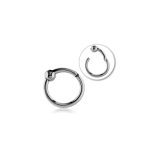
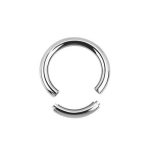
SMOOTH SEGMENT / CLICKER RING
A ring without balls. There are two types:
- In the smooth segment model, one part of the ring is removed (similar to the ‘clip in’ system in BCR) and when closing, the ring must be slightly expanded so that the removed part ‘sits’ in place
- The clicker (hinged) model has a small hinge with which part of the ring opens and closes
Due to the complexity of installation, the smooth segment ring has been almost completely replaced by clicker models.
CIRCULAR BARBELL
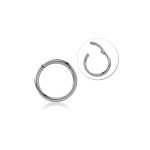
A semi-circular curved barbell with threaded balls on the ends. In most models, both balls are removable.
When purchasing replacement balls, it is important to pay attention to the type of threading (internally threaded or externally threaded) and the gauge (thickness) of the jewelry (for more information on threading, see the bottom of the page).

BODY SPIRAL
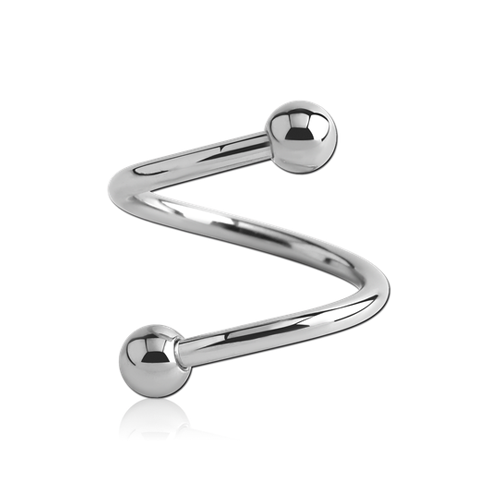
A spiral-shaped barbell with balls on both ends. Both balls are removable and threaded.
When purchasing replacement balls, it is important to pay attention to the type of threading (internally threaded or externally threaded) and the gauge (thickness) of the jewelry (for more information on threading, see the bottom of the page).
NOSE STUD
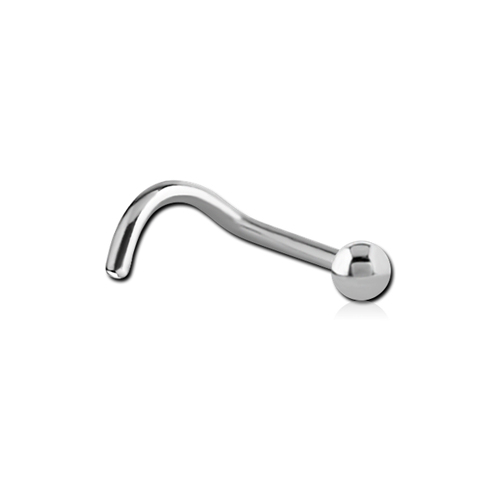
A nose screw for a nostril piercing.
Snagging can cause the jewelry to fall out, which may lead to the piercing channel narrowing.
Straight jewelry with a small ball on the inside of the nostril is not suitable for long-term wear, as the channel will constrict around the thin straight part of the jewelry, making it necessary to forcibly remove or cut it out.
MICRODERMAL / DERMAL ANCHOR
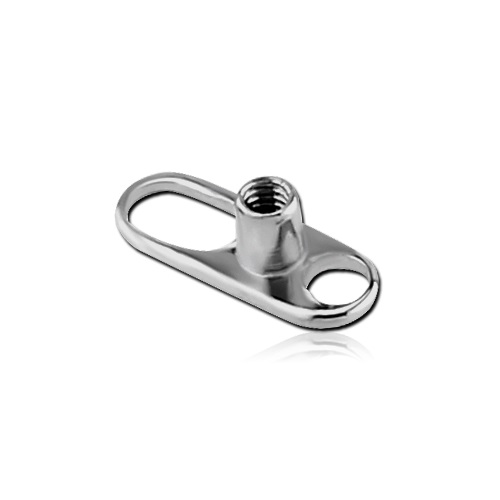
A base plate with holes and internal threading that allows various attachments to be mounted.
Also called a dermal anchor.
Standard microdermals use internally threaded 1.6 mm attachments.
SURFACE
A curved bar in a squared “C” shape. Depending on the threading, the ends can be balls, discs, etc.
Both ends are removable.
This shape of jewelry is the only suitable option for surface piercings.
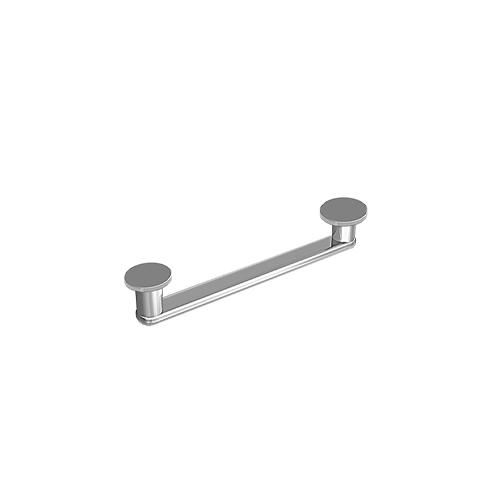
SHIELD
An accessory that can be added to piercing jewelry, partially or fully surrounding it.
The model shown is for a nipple, and there are also versions for the navel, as well as shields for the ball itself or for smaller bent barbells.

FLESH TUBE
Jewelry for stretching earlobes.
It is longer than standard tunnels and plugs, and the O-rings can be moved closer together or further apart, allowing extra space for possible swelling after stretching.
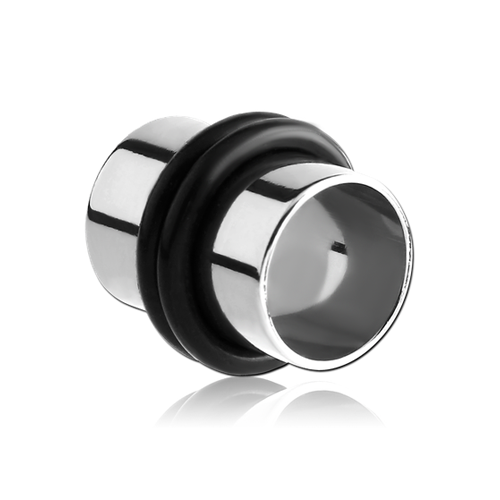
EAR PLUG / TUNNEL
Jewelry for stretched earlobes.
Single flared eyelet – has a wider flare at the front and an O-ring at the back.
Double flared eyelet – has a wider flare on both sides.
Flesh tunnel – one side has a threaded flare.
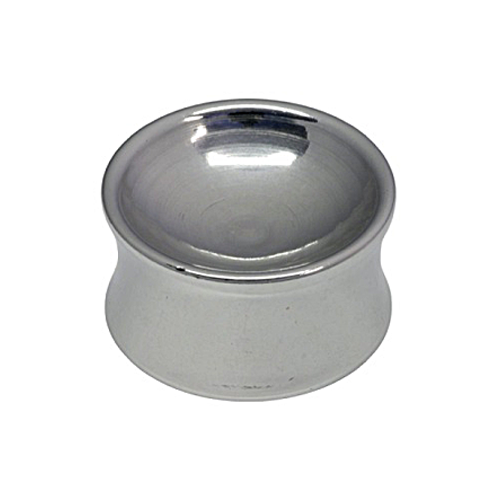
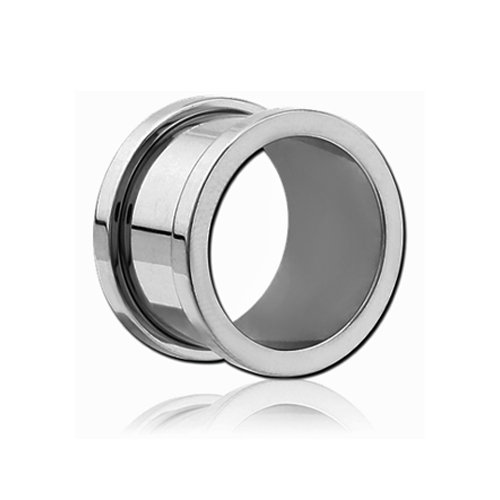
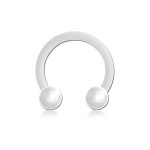
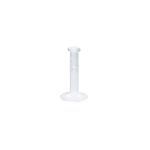
RETAINER
Bioplastic (biocompatible plastic) jewelry made to hide piercings or to keep piercing canals open in situations where metal jewelry must be removed (e.g., X-ray, MRI, surgery, etc.).
The speed of closure and/or narrowing of the piercing canal largely depends on:
- age of the piercing – a new piercing cannot be without jewelry for long
- placement – piercings in mucosal areas (tongue, lip, nostril, etc.) close faster
- your skin type
ZIRCONIA TYPES
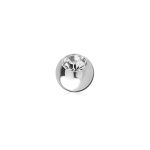
BEZEL SET
The zircon is put in a metal bearing. It is used for all types of jewelry – internally and externally threaded, and threadless jewelry.
Due to the way it is made, the possibility of zircon falling out and darkening is increased, especially on externally threaded models.
Over time, a layer of dirt forms between the zircon and the metal that is impossible to clean, so the zircon darkens or loses its shine (especially visible in transparent/white zirconia).
Models made for internally threaded and threadless jewelry can be very small and flat (from 1.5mm or more), while externally threaded models must be thicker due to the way they are made, and are not made smaller than 2.5mm.
PRONG SET
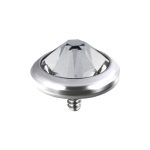
PRONG SET
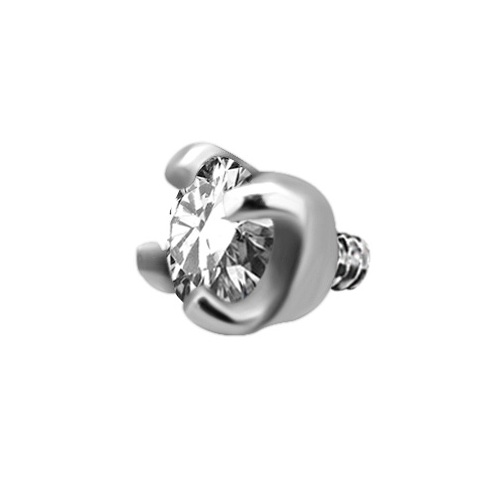
The zircon is enclosed by 3 or 4 hooks that hold it in place.
It is used for internally threaded and threadless jewelry, rarely for externally threaded.
Due to the manufacturing method, the risk of zircon stones falling out of their settings is significantly reduced.
The jewelry is more protruding in profile than bezel set models, with a minimum diameter of 1.5mm. For threadless jewelry, we do not recommend attachments larger than 4mm due to the possibility of breaking the ‘needle’ on the attachment.
With prolonged wear, dead skin cells will accumulate between the zircon and the metal, leading to a reduced shine of the zirconia. Jewelry can be cleaned in an ultrasonic tub (we offer the service at Octopus).
TYPES OF THREADS
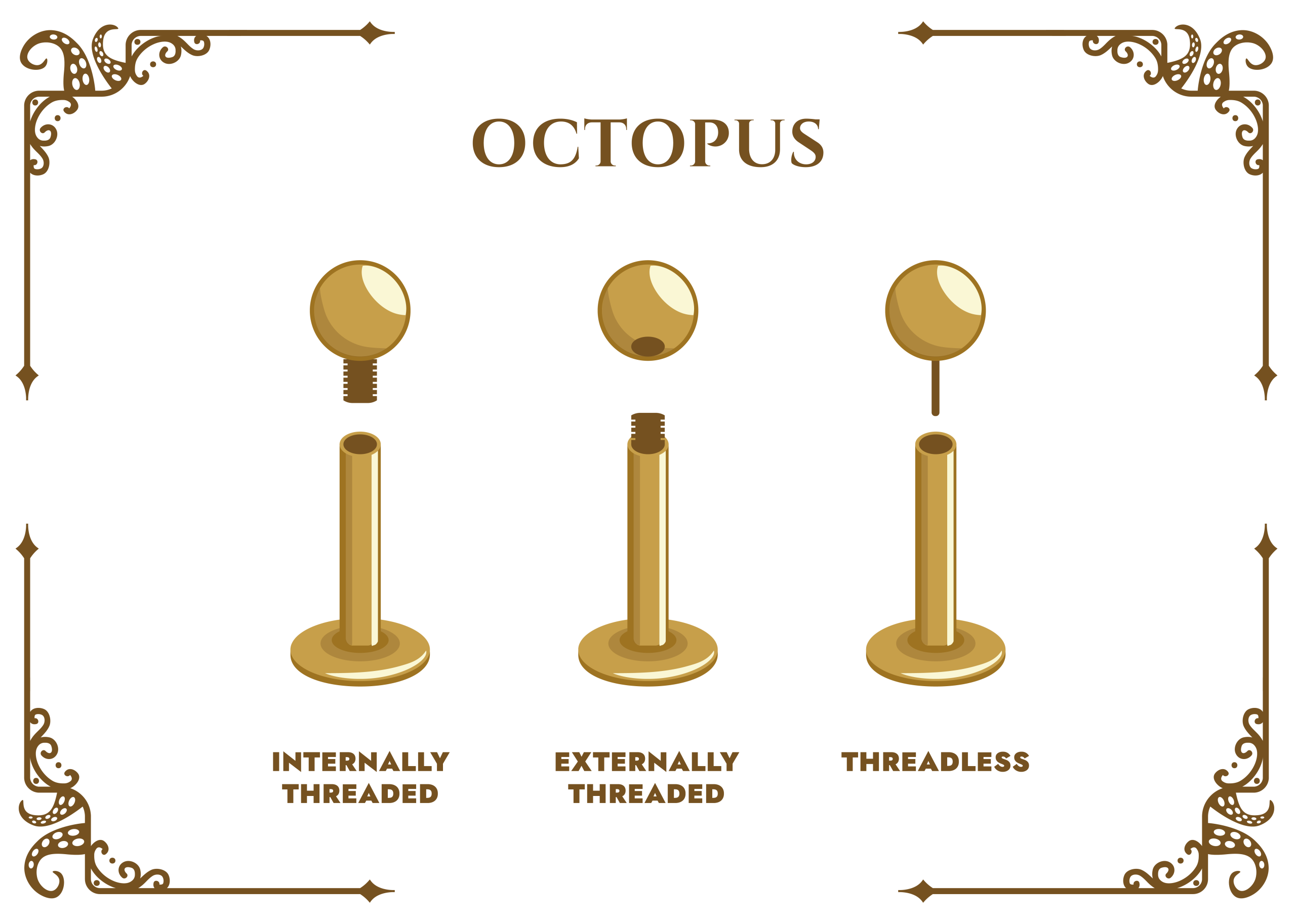
INTERNALLY THREADED
The rod (base) has a hole (internal thread) and the attachment has a visible thread.
Internally threaded jewelry with a 1.2 mm thickness (16ga) also differs in the thickness of the threading on the attachment itself:
- 0.8mm – European standard
- 0.9mm – U.S. Standard
This type of threading allows the production of very small and flat attachments, as well as the placement of zircons in prong settings, which ensures maximum durability of the zircon itself (no darkening, and the risk of the zircon falling out of its setting is reduced to a minimum).
It is made of implant grade titanium, steel and gold.
EXTERNALLY THREADED
The rod (base) has a visible thread (external) and the attachment has a hole.
With this type of threading, zircon stones are more likely to fall out of the balls, as overtightening the ball can cause the bar’s threading to push the zircon out of its setting.
With the development of the piercing industry, externally threaded becomes an obsolete system, but it is still present due to its lower cost.
It is made of implant grade titanium and steel as well as internally threaded jewelry, but the attachments are larger and do not have the same finesse of workmanship.
THREADLESS / PUSH FIT
Threadless metal jewelry models have evolved in the last few years due to the increasing production of gold piercing jewelry. Gold is much softer than steel and titanium, so the thread on gold jewelry wears out and breaks.
When mounting the attachment in the base, the ‘pin’ on the attachment must be bent in a certain way to prevent it from falling out.
This system is not recommended for attachments larger than 4 mm, as the size of the attachment may cause the “pin” to break if it gets snagged on.
The push fit system is used on bioplast jewelry. The attachment is just pushed into the base (without bending the ‘pin’) which expands slightly, because it is a soft and flexible material.
INSTALLING THREADLESS JEWELRY
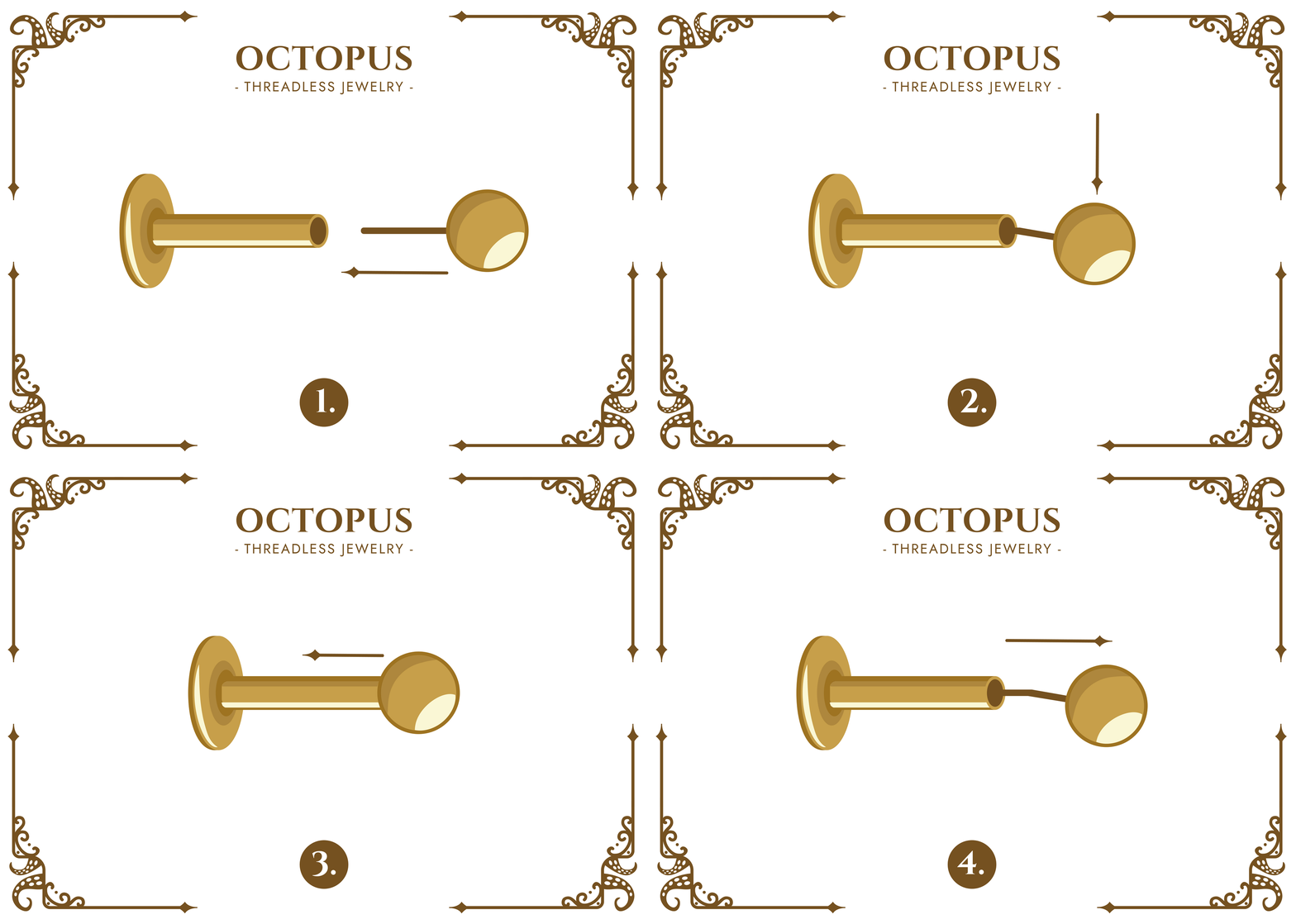
1. STEP OF INSTALLATION
Insert the pin into the base of the jewelry so that approximately half of its length goes inside. Do not push it all the way in at this stage – it is important to leave space for bending.
2. STEP OF INSTALLATION
Gently bend the pin with your fingers to create slight tension. This bending is what allows the attachment to sit securely in the base.
• The more the pin is bent, the tighter the connection will be – but it will also be harder to detach later.
• Be careful not to overdo it, as the pin may weaken or break.
3. STEP OF INSTALLATION
Push the attachment straight into the base until it fully sets. You should feel slight resistance and a sense of a “click” or stability – this indicates it is properly secured.
4.JEWELRY REMOVAL
Hold the base with one hand and the attachment with the other, then pull them in opposite directions.
If it doesn’t come apart easily:
• try gently rotating the attachment left and right
• at the same time, gently pull it outward
• avoid sudden or strong movements to prevent damaging the jewelry